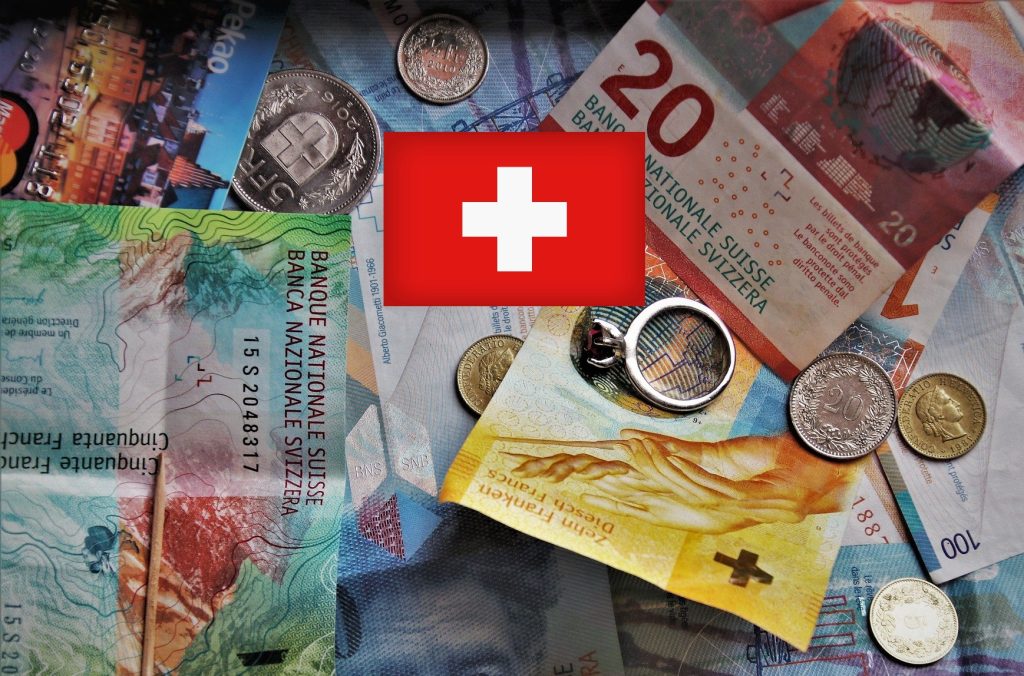
The abolition of physical currency

Reasons against the abolition of physical money

piggy bank

Protect Individual Privacy and Freedom

The most fundamental argument against the abolition of cash is its role as the last bastion of financial privacy.

  • Financial Anonymity: Cash transactions are peer-to-peer and generally anonymous. Abolishing cash means every single transaction – from buying a coffee to donating money – is recorded, time-stamped, and linked to an individual. This loss of anonymity is a direct threat to civil liberties and an enabler of a potential surveillance state.
  • Prevent Financial Discrimination (De-Platforming): In a cashless society, financial services providers (banks, payment networks) become gatekeepers to all economic activity. These entities could potentially de-platform individuals or groups whose political or social views they disagree with by freezing or restricting access to their funds, a power that is impossible when physical cash is available.
  • Freedom from Data Harvesting: The digital trail left by cashless payments is a goldmine for data brokers and corporations. Eliminating cash means all personal spending habits become commercial data, leading to hyper-targeted advertising, potentially manipulative pricing, and other forms of data exploitation.

Addressing Financial Exclusion and Inequity

Cash serves a crucial role in ensuring universal access to the economy, particularly for vulnerable groups.

  • The Unbanked and Underbanked: In many countries, a significant population cannot use formal banking services – e.g. in the Philippines (and many other poorer countries) only 50% of Filipino adults have a financial account with a formal institution1 – only Cash Money is their gateway to the market.
  • Digital Literacy and Access: The ability to use digital money requires a smartphone or computer, reliable internet, and a degree of digital literacy. The elderly, those in poor health, or residents of areas with poor internet broadband infrastructure would face significant barriers to participation in a cashless economy.
  • Budgeting and Debt Prevention: For many lower-income households, physical cash is a superior tool for tangible budgeting. Seeing the physical money drain away makes spending limits clearer and more immediate than abstract digital numbers, helping to prevent debt.

Pay Cash

Ensuring Systemic Resilience and Backup

Cash acts as a critical backup mechanism when technological systems fail.

  • Cybersecurity Risk: A fully cashless society concentrates all economic activity into a single, massive digital target. A major, coordinated cyber-attack on a national power grid or a central payment network could instantly paralyze the entire economy, making basic survival (buying food, gas, medicine) impossible.
  • Infrastructure Failure: Reliance on digital payments means the economy is vulnerable to simple failures like power outages, telecom disruptions, or hardware malfunctions. Cash functions reliably regardless of whether the lights are on or the internet is running.
  • Emergency and Disaster Preparedness: In natural disasters (hurricanes, earthquakes, floods), payment systems often crash, and power is lost for extended periods. Cash is essential for humanitarian aid and maintaining basic services until infrastructure can be restored.

Monetary Policy and Negative Interest Rates

Cash provides an essential floor for monetary policy, known as the Zero Lower Bound (ZLB)².

  • Limiting Negative Rates: In a deep recession, central banks might wish to impose negative interest rates (charging banks to hold money!) to force banks to lend and encourage consumers to spend. If the rate becomes too negative, people would simply withdraw their funds and hold them as physical cash (which has a zero nominal return). Only this risk of cash hoarding prevents central banks from setting interest rates too low.
  • Eliminating the Cash Floor: Abolishing cash removes this constraint. This gives central banks potentially unchecked power to impose highly punitive negative rates, which could erode savings and distort financial markets in unpredictable ways, undermining a citizen’s ability to save for the future.

farmers market
Small Business Viability and Cost

Cash transactions often represent the lowest-cost form of payment for businesses, especially all the small ones.

  • Avoidance of Merchant Fees: Banks and payment processors charge businesses merchant interchange fees for every credit or debit card transaction. For small businesses with thin margins, these fees (often 1-3% of the transaction) can be substantial. Cash transactions bypass these costs entirely.
  • Speed of Settlement: While digital payments can be fast, cash provides instant, guaranteed settlement for the merchant, eliminating the risk of chargebacks or settlement delays sometimes associated with electronic funds.

All these arguments underscore that physical currency is not just an old-fashioned payment method
it functions as a public utility
a guarantee of privacy
and a cornerstone of systemic resilience.

  • How do you buy things? Do you still like to pay for things in cash? Or do you prefer to use digital services?
    Tell us your favorite payment method (and why) in the comment section.
  • What thoughts and feelings do you have towards cash, bills and coins?
  • Do you like having money, what you can hold in your hands?
  • Should we all go cashless?
  • What do you see as downsides of a cashless society?
  • Should we be concerned about the large profits enjoyed by banks and credit card companies?
  • Should we be concerned about the privacy risks?
  • Do you want to pay your ice cream cashless? And if so, How?
  • Should all businesses still have a cash option?
  • Should it even be forbidden for businesses to refuse cash payments?
  • Do you think we will ever live in a completely cash-free economy?

I would be pleased if you would share your thoughts in the comments section.

1 BusinessWorld – Only 50% of Filipino adults have financial accounts

² Wikipedia: Zero lower bound

Paymenttools.com: Why we are not abolishing cash

Walden University: Should We Become a Cashless Society?

Digital Euro: The hidden risks

Digital Euro: The hidden risks to your money and your privacy
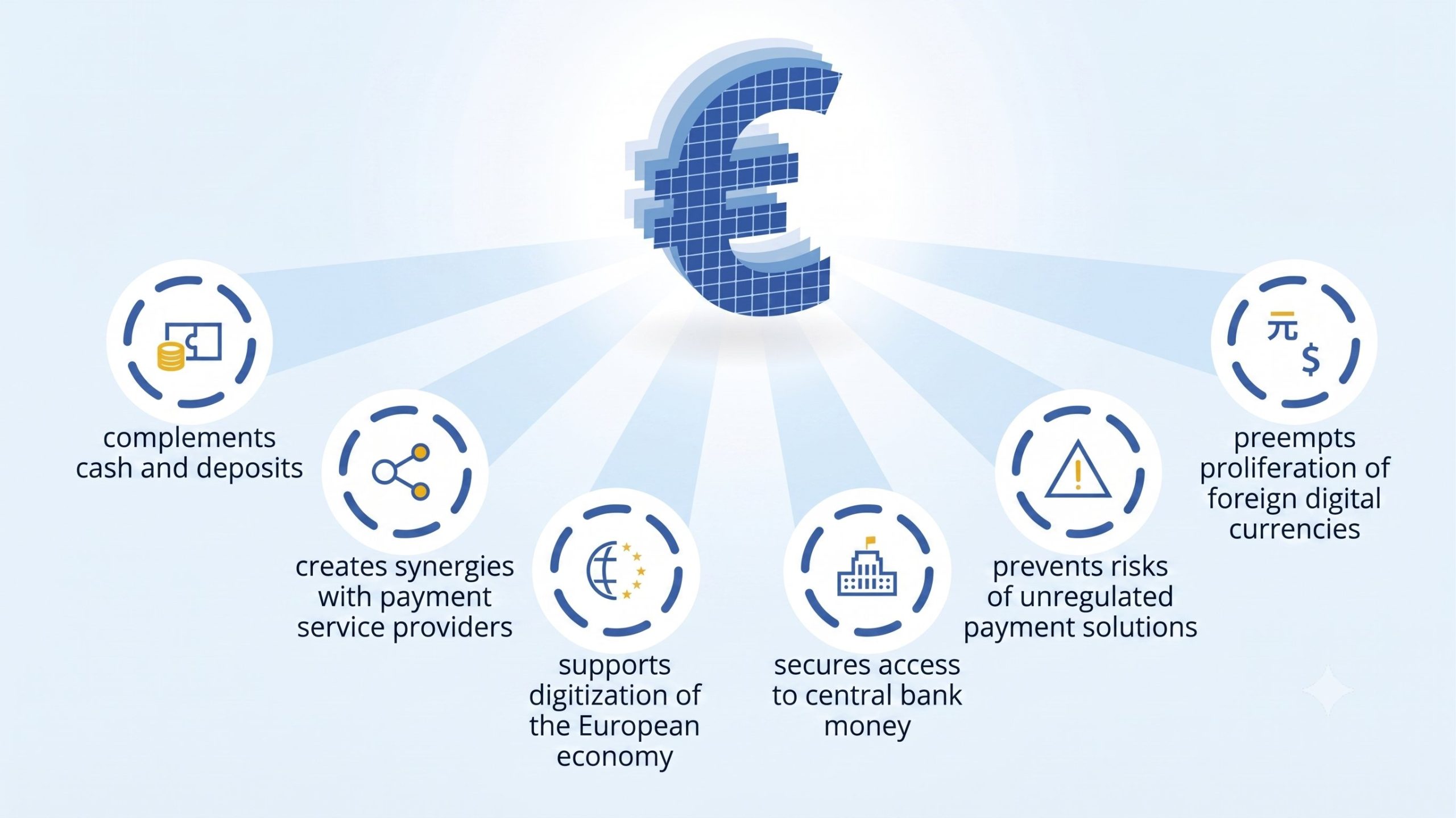
Digital Euro: The hidden risks to your money and your privacy

Modern, convenient, secure – that’s how the digital euro is often presented. But behind this facade lie questions that hardly anyone talks about openly. Who will be able to track your every payment in the future? Will the authorities be able to dictate how much digital money you’re even allowed to own? The digital euro could change our relationship with money in ways we can hardly imagine today.

This article explains what the digital euro really is, when it will arrive – and, above all, what specific dangers it poses to your privacy and your assets. From surveillance and holding limits to the potential abolition of cash: the risks are real, and they affect everyone.

What is the digital euro and when will it be released?

Digital Euro: Definition and basics

The digital euro is not cryptocurrency, not a PayPal clone, or a new app from your bank. The European Central Bank (ECB) envisions it as a digital form of cash – central bank money issued and guaranteed by the ECB, just like the banknotes in your wallet today. As legal tender, it must (or should) be accepted everywhere in the Eurozone.

It will be used via an electronic wallet, which you set up with your bank or a payment service provider. Your digital money will be stored there. Basic services—especially making payments – will be free of charge.

It will work both online and offline. Even during a network outage, you could continue making payments as long as your smartphone has power. However, there is already a catch: a limit of €3,000 is being considered. You would not be allowed to keep more than this amount in your digital wallet – more on that later.

Current rollout schedule

The project has been underway since October 2021. Following an investigation phase that lasted until October 2023, the preparatory phase ran from November 2023 to October 2025. The technical foundations are to be established starting in November 2025.

In parallel, the EU Council and the European Parliament are working on the legal framework. The Economic and Monetary Affairs Committee and the plenary have already given their approval. The legal framework is expected to be adopted by the end of 2026 (framework adoption is not yet final).

A pilot project with banks and retailers could begin in mid 2027. Public implementation is realistically not expected before 2029 – and only if the legislative process is completed.

Difference to cash and cryptocurrencies

Three comparisons help to put the digital euro into perspective.

Compared to cash: The digital euro exists only electronically. However, like cash, it is guaranteed by the central bank and accessible to everyone – without any account requirements.

Compared to Bitcoin and other cryptocurrencies: The difference is fundamental. Cryptocurrencies are decentralized, subject to strong price fluctuations, and are not backed by any single entity. The digital euro is issued and controlled centrally by the ECB; its value remains stable and is pegged one-to-one to the physical euro.

Compared to current card payments: This is where it gets interesting. When paying by card or bank transfer, you have a claim against your bank. With the digital euro, this claim would be directly against the ECB. This would make it more secure than regular bank deposits in a crisis – neither a bank failure nor the collapse of a payment service provider could jeopardize it.

So far, so good. But this is precisely where the questions begin that the ECB prefers not to ask aloud.

Hidden risks to your privacy

Monitoring through central payment data

Digital payments leave a trace. Every transaction with the digital euro is recorded – at least for online payments. Payment service providers and banks must be able to track transactions, as required by anti-money laundering regulations.

With cash, no one knows what you do with it. With digital payments, there’s always someone who knows. And that’s precisely the problem: Who exactly has access to this data? Data protection advocates are already warning that digital central bank money could lead to increased profiling and surveillance.

Loss of anonymity when paying

Cash is discreet. No one knows where you spent your money. PayPal, Visa, Mastercard – they all collect and analyze your payment data. The digital euro doesn’t improve matters.

Complete anonymity is impossible. While the Eurosystem can’t directly identify you with online payments, your bank sees exactly where you spend your money. That’s not a small difference – it’s the crux of the problem.

Government access to transaction history

The Berlin Group, an international data protection working group, is sounding the alarm. It warns of unprecedented government access to citizens’ financial data. Governments, central banks, financial institutions – they could all theoretically view your transaction history.

The German Federal Ministry of Finance disagrees: The ECB and other central banks will not be granted access to personal data. A risk-based approach is planned for everyday payments, designed to protect privacy as much as possible. Whether this will hold up in practice remains to be seen.

Data protection: What the ECB promises

The ECB makes clear promises: The highest data protection standards, no linking of online payments to individuals, and only pseudonymized data for the Eurosystem. Your bank will receive only the minimum information required by EU law.

That sounds solid. But promises and reality are very often two different things – especially when it comes to data.

Offline payments as a solution?

Offline payments would be the exception that truly offers protection. Only you and the recipient would know about the transaction – similar to cash. The catch: Both the number and the amount of such payments will be limited. This is not a true replacement for the anonymity of cash.

Danger to your money and the banks

Holding limits restrict your assets

How much digital euro are you allowed to hold? The Bundesbank is currently discussing limits between 500 and 3,000 euros. That sounds like a small amount – and it is. Many Germans have significantly more than 3,000 euros in their checking accounts.

This limit applies exclusively to the balance in your digital wallet, not to individual payments. Want to transfer larger amounts? It’s possible – the system automatically tops up your balance from your bank account. But how much you’re allowed to have readily available will be determined by someone else in the future.

Risk of a digital bank run

A digital bank run unfolds faster than anything we’ve ever seen before. No queuing at the bank counter, no waiting. Anyone wanting to secure their money during stressful times can do so with just a few clicks – en masse, simultaneously. Households surveyed openly admit to planning exactly that: In a crisis, they would withdraw more cash as soon as the digital euro is available.

The collapse of Silicon Valley Bank demonstrated how quickly such dynamics can develop. Cash, at least, still has physical boundaries. The digital euro does not.

Banks lose deposits and business model

Banks operate on a simple principle: customer deposits in, loans out. If these deposits flow to the ECB instead, the capital for lending is lacking. Studies show that the return on equity drops noticeably – especially for smaller banks.

To put it in figures: If every household held € 3000,- in digital euros, banks would lose between 1.35% and 1.62% of their capital per year. The result would be higher borrowing costs – for individuals as well as businesses (Source: Universität Würzburg: Der Digitale Euro Nutzen, Kosten und Risiken).

Potential negative interest rates on digital money

Economists face a dilemma: The digital euro must be attractive enough for people to use it – but not so attractive that bank deposits leave en masse. Achieving this balance is considered virtually impossible.

Negative interest rates could be used as a steering mechanism. This sounds technical, but in concrete terms, it means your digital assets will lose value over time. Quietly, systematically – and completely legally.

Further hidden risks of the digital euro

Technical dependency and cyber risks

No electricity, no internet – no digital euro. The offline function exists, but it’s limited. Anyone who wants to access their money during a prolonged power outage is simply out of luck.

There’s another risk, too: Attacks on digital payment systems could increase. The ECB promises state-of-the-art technologies to protect against cyberattacks. But no digital system is invulnerable – that has never been the case, and it never will be.

Programmable money: Myth or danger?

Imagine your money works like a voucher. You can only spend it on specific purposes, nothing else. The ECB is clear: That’s not how the digital euro will work. What banks could offer, however, are so-called conditional payments. Whether that will ultimately make a difference remains to be seen.

Harmonisation of European payment systems

Visa, Mastercard, PayPal – American corporations currently dominate the European payments market. The digital euro is intended to change that and reduce dependence on these companies. It would contribute to European sovereignty. That sounds reasonable – as long as the alternative doesn’t mean even more centralized control.

Abolishing cash through the back door

The ECB assures that cash will not be replaced. Critics don’t believe it. Slovakia enshrined the right to cash payments in its constitution in 2023 – simply because its members of parliament distrusted the assurances from Frankfurt. It is remarkable when an EU member state deems this step necessary.

Conclusion

The digital euro is coming – whether we’re ready or not. Data protection gaps, holding limits, cyber risks, potential negative interest rates, and a gradual phasing out of cash: These aren’t speculations, but concrete scenarios that economists, data protection advocates, and even some governments are already taking seriously.

There’s still time until 2029. Use it wisely. Follow the decisions made in the EU legislative process – because that’s where the course will be set. Those who stay alert now will be better able to assess later what the digital euro actually means for their money and their privacy.

FAQs

Q1. What will happen to my savings when the digital euro is introduced?
Your existing savings in bank accounts remain unchanged. The digital euro is an additional payment option, not a replacement for your bank balance. However, there will likely be a holding limit of € 500,- to € 3000,- for digital euro balances. You can still only keep higher amounts in your regular bank account.

Q2. Is the digital euro dangerous for the financial system?
There are risks to financial stability. In times of crisis, citizens could quickly transfer large amounts of money from bank accounts into digital euros, which could lead to a digital bank run. Furthermore, banks lose deposits that they need for lending, which can result in higher borrowing costs.

Q3. Will my payments with the digital euro be anonymous?
Complete anonymity like with cash is impossible. While the ECB cannot directly identify you with online payments, your bank will always know what you are spending your money on. Only offline payments would offer cash-like privacy, but with limitations on the number and amount of transactions.

Q4. Could the digital euro lead to the monitoring of my spending?
Yes, the risk exists. Every digital transaction leaves traces that payment service providers must track. Data protection advocates warn of increased profiling and surveillance. Governments and financial institutions could theoretically gain access to transaction histories, even though the ECB promises the highest data protection standards.

Q5. Will the digital euro lead to the abolition of cash?
The ECB assures that cash will not be replaced. Critics, however, fear a gradual phasing out of cash. Some countries, such as Slovakia, have already enshrined the right to cash payments in their constitutions because they distrust the ECB’s announcements.

Sources & links

Digitaler Euro – was ist das und wozu dient er?

Einführung Digitaler Euro: Was er bedeutet – und was er Ihnen bringt

Europäischer Rat (Wikipedia)

Fachleute warnen vor Risiken des digitalen Euros

Auf einen Blick: Digitaler Euro

 

Swiss vote: Cash receives constitutional protection

Anchoring of Cash Supply in the Federal Constitution Decided

Cash in Switzerland

Introduction

Cash remains constitutionally protected in Switzerland. In a referendum on Sunday, 73.4 percent of citizens voted for a federal decree that secures coins and banknotes as official currency. The franc and the cash supply by the Swiss National Bank are now directly enshrined in the Federal Constitution.

In light of debates over digital money, the Digital Euro, and the possible abolition of cash, Switzerland is sending a clear signal. Is cash being abolished? This question moves people worldwide. We show what the decision means in concrete terms, what signaling effect it has internationally, and how the cash debate is developing in Europe.

73.4 Percent Vote for Constitutional Protection of Cash

Clear Majority for Counter-proposal

The Swiss electorate accepted the counter-proposal from the Federal Council and Parliament with 73.42 percent “Yes” votes. Voter turnout was 55.37 percent. All cantons approved the counter-proposal.

The counter-proposal adds two sentences to the currency article in the Constitution. First, it establishes that the franc is the currency of Switzerland. Second, the Swiss National Bank guarantees the supply of cash.

The amendment elevates a regulation that previously only existed at the legislative level into the Constitution. In the future, these provisions can only be changed by a referendum requiring a majority of the people and the cantons.

Cash Initiative Fails with 54.4 Percent “No” Votes

The popular initiative “Cash is Freedom” was rejected with 54.42 percent “No” votes. Of the 23 estates (cantons), 14 rejected the initiative.

The initiative by the Free Movement Switzerland (FBS) demanded more far-reaching changes. It specifically wanted to name “coins and banknotes” in the Constitution. The Confederation would have had to ensure that these were always available in sufficient quantities.

Furthermore, the Swiss franc would have had to be maintained as the only national currency. Replacement by another currency would only have been possible with the consent of the people and the cantons.

The Federal Council and Parliament considered the concern justified, but these demands went too far for them. The counter-proposal formulated the goals more leanly.

What Changes Specifically for Swiss Citizens?

Nothing changes in everyday life. Neither the initiative nor the counter-proposal has practical effects. No new tasks or additional costs arise.

The Swiss National Bank already fulfills the mandate to ensure the supply of cash today. The franc as the Swiss currency is already anchored in the law.

Citizens can continue to choose freely whether to pay with a smartphone, card, or cash. The vote primarily has a symbolic effect. The voting population thus underscores the importance of cash.

Finance Minister Karin Keller-Sutter explained that nothing would change for the economy and the population. Cash still holds great importance in Switzerland.

Is Cash Being Abolished? Swiss Secure Coins and Banknotes

Cash is Disappearing from Everyday Life

At the latest since the pandemic, fewer and fewer people are paying in cash. Only every fourth purchase is paid for with coins or bills today. Six years ago, it was almost every second purchase.

The share of cash in all payments fell from 48 percent in 2019 to 24 percent. This is a halving within just a few years.

Parallel to this, the infrastructure is disappearing. In the last five years, around 1,000 ATMs have been removed. Almost one in two people feels that access to cash has deteriorated.

Nevertheless, eight out of ten Swiss people continue to carry cash with them. On average, they have 50 francs in their wallet or pocket. Some even have 130 francs. And 200 francs at home in the nightstand drawer.

Digital Money on the Rise

The smartphone has become the most important means of payment. Already 31 percent of all payments are processed via mobile phone. In 2019, it was only 3 percent.

The driver of this development is Twint. The banks’ payment app has over 6 million users and more than 800 million transactions per year. In addition, there are Apple Pay, Google Pay, and mobile banking apps.

For many, it is worse if they forget their phone than if their wallet stays at home.

Why the Swiss Still Hold on to Cash

A contradiction emerges here. The more digital everyday life becomes, the stronger the desire for a physical counterweight seems to be.

A large majority of 95 percent wants to keep cash in Switzerland. And 71 percent clearly reject abolition. Three years ago, it was 60 percent.

Cash is seen as a safety cushion. A large proportion of respondents have already experienced technical failures—whether with card terminals, apps, or network outages. Therefore, they like to fall back on cash in emergencies.

SNB surveys show: only what is used today will also exist in the future. However, the vast majority would like to have the option to pay with cash in the future as well.

International Signaling Effect: Role Model Against the Abolition of Cash

Brett Scott: “An Important Signal to the World”

The South African anthropologist and activist Brett Scott calls the Swiss decision an “important signal to the world”. Banks have been promoting digital money for decades. Therefore, it is important when a country takes a clear position and wants to protect cash.

Scott knows many reasons why people hold on to cash. Elderly people or people with visual impairments rely on it. Those who have little use cash for a strict budget. At the same time, people with low incomes often do not trust the banking sector.

There are also security experts who are concerned if access to cash is lacking. Libertarian circles worry about the surveillance of digital systems. Many want to preserve an informal sphere without institutions in every area of life.

Digital Euro and the Cash Debate in Europe

Cash is legally anchored at the constitutional level in the EU. The ECB is working on a new generation of Euro banknotes, which are expected to be introduced in a few years. The Digital Euro is intended only to supplement cash, not replace it. The Bundesbank emphasizes that it does not want to harm cash. Data protection and privacy are top priorities for the European legislator.

Justified Concerns

However, many reports are circulating that cash is to be abolished or that state surveillance is to be introduced via the Digital Euro. Jan Rathje from the Center for Monitoring, Analysis, and Strategy believes it is definitely sensible to take a critical look at digital currencies. However, this must take place on a factual level.
What risks digital currencies can pose is shown by authoritarian states like China. There, WeChat is used for payment and used by the government as an instrument for surveillance.

What’s Next? Cantons Discussing Acceptance Requirements

Geneva Leading the Way: Gastronomy Businesses Must Accept Cash

The constitutional vote was just the beginning. Several cantons are already going further and debating specific obligations to accept cash.

Geneva is the furthest along. In October, the cantonal parliament obliged gastronomy businesses to accept cash. The trigger was an initiative by the 30-year-old SVP politician Virna Conti. She was annoyed that at the Geneva football stadium, a portion of fries could only be paid for by card.

Conti argued that it was about consumer choice. Cash does not exclude anyone and causes no commissions for electronic payment systems. The SP and the Greens supported the move. They pointed out that not all elderly people own a credit card.

The FDP and the Center warned against an disproportionate obligation for businesses. The transport of cash is expensive for companies. Nevertheless, the business was accepted with a comfortable majority.

Hotel Ruby Claire filed a complaint with the Geneva Constitutional Court. The operators see a security risk for employees and a violation of economic freedom.

Demands for Public Service and Transport

In Aargau and Bern, members of the Grand Council from the Center and SVP are demanding similar regulations in the Gastronomy Act. A motion is pending in the Zurich Cantonal Council to oblige the transport association to accept cash.

The Zurich government is examining whether public institutions such as swimming pools or museums can be obliged to do so. Those who want contracts from the canton could be obliged to accept cash in the future.

Following the National Council and the Council of States, passengers in public transport should continue to be able to pay for tickets with cash in the future. Transport companies must ensure that no one is disproportionately disadvantaged.

Symbolic Victory with Real Consequences

Gastrosuisse rejects a cash obligation. It belongs to entrepreneurial freedom to decide for oneself which means of payment are accepted.

The Federal Council considers a mandatory acceptance requirement to be too strong an intervention in the freedom of contract. The initiative does not change the current design.

Nonetheless, political initiatives are gaining additional momentum through the vote. The debate shows: cash remains politically relevant.

Conclusion

The Swiss vote clearly shows: cash remains relevant. At the same time, we observe how digital payments shape everyday life. This contradiction is characteristic of our time. People want to keep both options.

We have seen that symbolic decisions can have real consequences. The cantons are already acting and discussing specific acceptance requirements. The vote was thus more than just a sign. It was the starting signal for a broader debate on payment freedom in the digital future.

FAQs

Q1. What exactly was decided in the Swiss cash vote?
In the referendum, 73.4 percent of Swiss citizens voted for constitutional protection of cash. The franc as the official currency and the cash supply by the Swiss National Bank are anchored directly in the Federal Constitution. However, the more extensive “Cash is Freedom” initiative was rejected with 54.4 percent.

Q2. Does anything change in the everyday life of the Swiss as a result of the vote?
No, nothing changes in everyday life. Citizens can continue to choose freely whether to pay with a smartphone, card, or cash. The Swiss National Bank already ensures the supply of cash today. The vote primarily has a symbolic effect and underscores the importance of cash for the population.

Q3. How has cash usage in Switzerland developed in recent years?
Cash usage has declined significantly. Only every fourth purchase is paid for with coins or bills today—six years ago it was almost every second. At the same time, around 1,000 ATMs have been removed in the last five years. Nevertheless, eight out of ten Swiss people continue to carry cash with them.

Q4. What international signaling effect does the Swiss decision have?
The vote sends an important signal to the world that a country is actively taking a position for the protection of cash. This is particularly relevant against the backdrop of debates about digital currencies such as the Digital Euro. The decision shows that cash remains important as a safety cushion and for maintaining freedom of choice.

Q5. Is there an obligation for shops in Switzerland to accept cash?
So far, there is no nationwide acceptance requirement. The canton of Geneva, however, obliged gastronomy businesses to accept cash in October. Other cantons such as Aargau, Bern, and Zurich are discussing similar regulations. However, the Federal Council considers a mandatory acceptance requirement to be too strong an intervention in the freedom of contract.

Cash Initiative: 73.42 Percent Yes-Votes
Cash is disappearing more and more: Only every fourth purchase
ECB Digital Euro: Cash is legally anchored at the constitutional level in the EU
Gastronomy businesses must accept cash
Acceptance requirement for cash: Hotel Ruby Claire filed a complaint

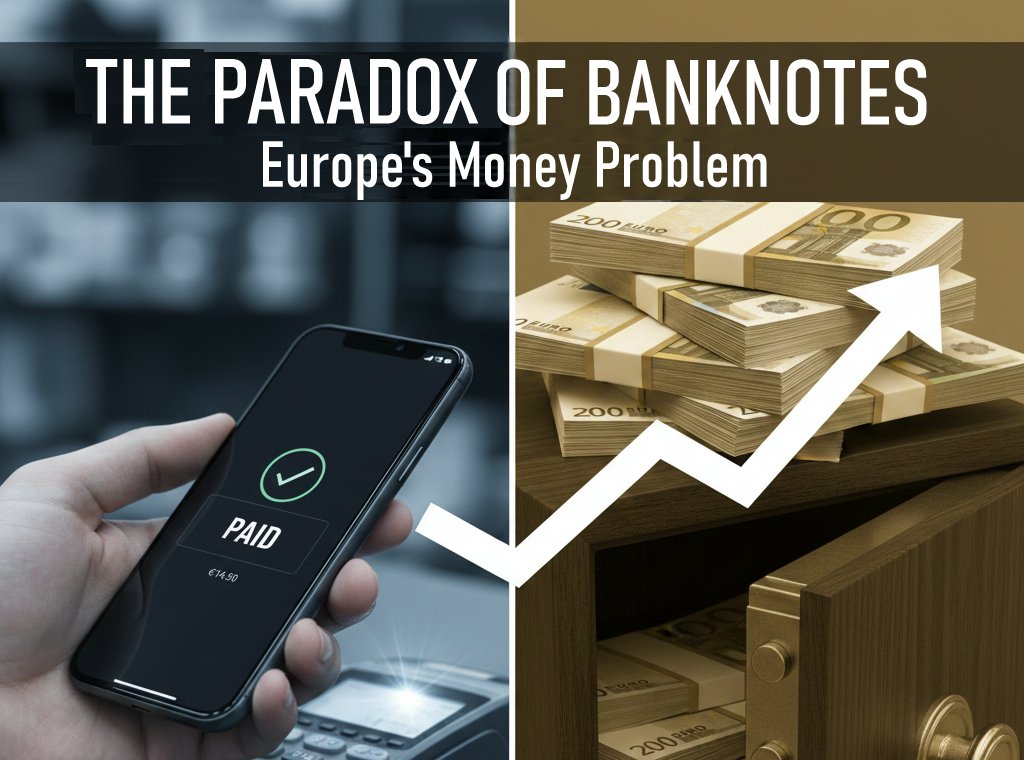
The “Paradox of Banknotes”

The “Paradox of Banknotes”:
Why Cash Value is Growing While Use Declines

The Paradox of Banknotes

The “paradox of banknotes” describes a fascinating trend in the euro area: while consumers are using cash less frequently for daily purchases, the total value of euro banknotes in circulation continues to grow significantly. This divergence is explained by the increasing function of cash as a secure store of value, both domestically and internationally.

Decline in Transactional Use (The “Cash-Less” Trend)

Data from the European Central Bank (ECB) clearly shows a shift away from cash at the point-of-sale (POS):

Metric 2016 Data 2022 Data Change Source
Share of Cash in POS Transactions (by number) 79% 59% -20 percentage points ECB (SPACE Study)
Share of Card Payments in POS Transactions (by number) ~19% 34% +15 percentage points ECB (SPACE Study)

Growth in Total Value (The “Cash-More” Trend)

In contrast to the declining frequency of use, the overall value of euro banknotes in circulation has more than doubled since the currency’s initial years, illustrating the hoarding trend:

Metric 2009 Data July 2023 Data Growth Rate Source
Total Value of Euro Banknotes in Circulation €776 billion Approx. €1.569 trillion Over 100% Increase ECB
Value in Circulation per Euro Area Resident €2,400 Approx. €4,500 +87% Analysis of ECB Data

The Components Driving Demand for Banknotes

ECB research attributes the growth in total value primarily to two non-transactional purposes:

  • Store of Value (Hoarding): Held by households and businesses within the euro area as a precaution against financial instability or systemic risk, or simply as a form of saving.
  • Foreign Demand: Held outside the euro area, where the euro acts as a stable, parallel currency, particularly in regions with less reliable financial systems.

Estimated Share of Total Value in Circulation (Non-Transactional vs. Transactional)

Demand Component Estimated Share of Total Value Primary Purpose Source
1. Foreign Demand 30% to 50% International store of value/parallel currency ECB Occasional Paper Series No 253 (2021)
2. Store-of-Value (Hoarding) ~40% Domestic savings and precautionary reserve Banque de France / ECB Estimates
3. Transactional Demand ~10% to 20% Day-to-day purchases and payments Banque de France / ECB Estimates

Key Insight: The high demand for cash is primarily driven by high-denomination banknotes (€50, €100, and €200), which are held for long periods and are rarely seen in daily transactions, confirming their function as a secure, dense store of value.

Sources & Links:

ATMs and POS in Europe – statistics & facts (Statista)

Payments statistics: first half of 2024 (European Central Bank)

PDF: Trends in the cash cycle (Banque de France)


Scroll to top


Agentur Best